

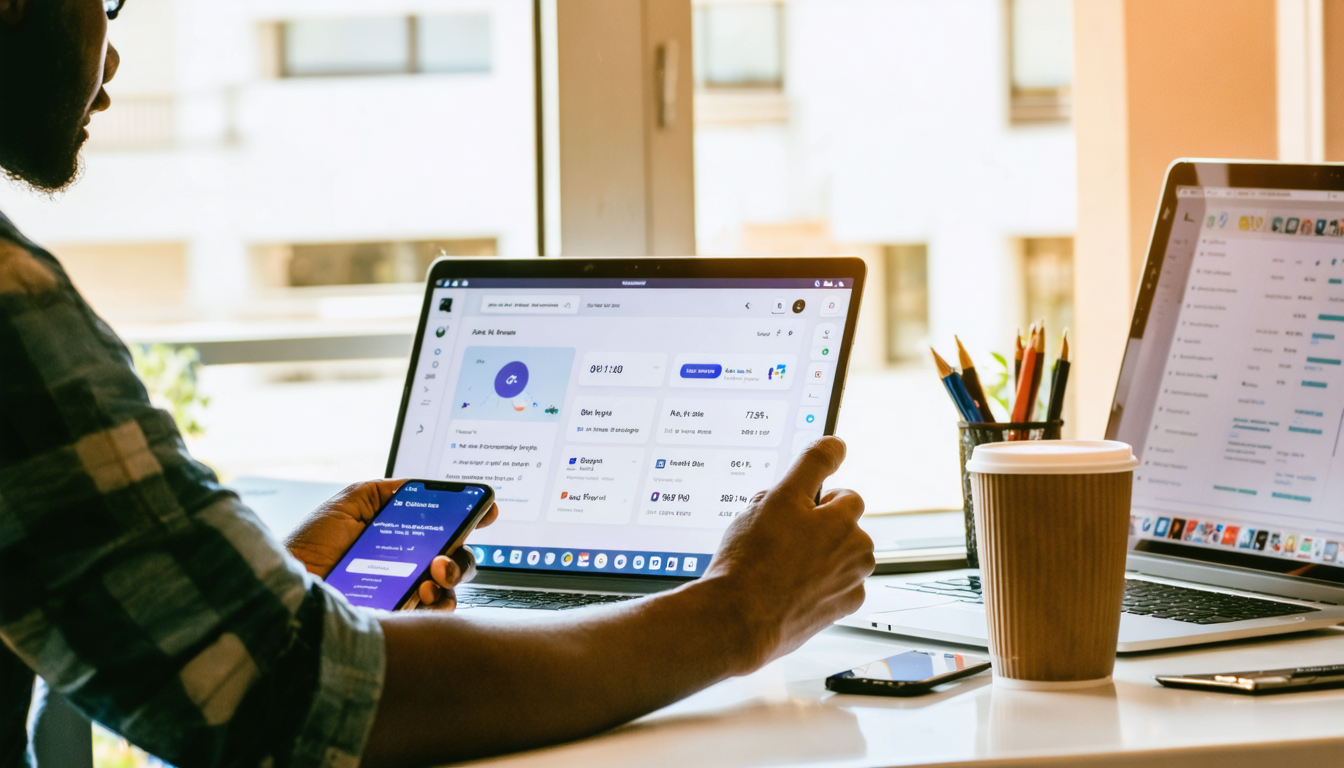
The CBN announced this week that it is deploying artificial intelligence to fight payment fraud across Nigeria's banking system. For dollar earners and remote workers, this matters: fraud detection systems directly affect how quickly your transfers clear, which routes remain open, and how often your account gets flagged for review.
Let's break down what's coming, and what you need to know now.
Why the CBN is moving on fraud detection now
Nigeria's payment system has grown faster than its guardrails. In recent years, the CBN has tightened rules on dollar inflows, remittances, and cross-border transfers—partly to catch illicit flows, but also because fraud (SIM-swaps, account takeovers, fake invoices) has become harder to spot manually. Banks are overwhelmed. The CBN's new AI push signals that the regulator believes machines can sort signal from noise better than humans reviewing thousands of transactions daily.
This is not new globally—major banks everywhere use AI to flag suspicious activity—but it is new for Nigeria's scale and urgency. Expect rollout over the next 6–12 months.
What AI fraud detection actually does
AI systems in payment networks work by learning patterns. They flag transactions that deviate from your normal behaviour: a $5,000 transfer at 3 a.m. to a new recipient in a high-risk country, or a $50 purchase from your account in two different cities in 10 minutes. The system doesn't block you—it alerts the bank, which then decides whether to pause, approve, or ask you to verify.
For dollar earners, this means:
- Faster legitimate transfers: Routine payments (your usual freelance client, monthly retainer, invoice to a known vendor) should clear quicker because the AI recognizes them as low-risk.
- More friction on edge cases: A one-off large transfer, a new recipient, or an unusual time of day might trigger a hold or a verification step. You may need to call your bank or reply to an SMS to confirm.
- Fewer false positives over time: As the system learns your patterns, false alarms should drop. But the first few months may feel stricter.
How this affects your dollar workflow
If you receive payments from international clients into a Nigerian bank account, or if you hold a dollar wallet and transfer to Naira, the AI will be watching the same rails. A few practical implications:
Receiving money: International wire transfers to your Nigerian account may face new delays if the AI flags them as unusual. This is especially true if your client is new, the amount is large, or the sending country is unfamiliar to the system. Prepare for a 24–48 hour review window on first-time large transfers.
Sending money: If you're converting dollars to Naira and moving funds domestically, the AI will cross-reference your account history. Sudden large outflows to new recipients are riskier signals than regular, smaller ones.
Documentation matters: The CBN has long required proof of income for dollar transfers. With AI in place, that documentation will be checked faster and more systematically. Keep invoices, contracts, and client confirmations handy.
What you should do now
There are no new rules to follow—the CBN is not changing the law, just how it enforces it. But you can make the transition smoother:
- Establish a pattern: Use the same account for regular transfers over the next few months. Let the AI learn what "normal" looks like for you.
- Communicate with your clients: If you're expecting a large or unusual transfer, brief your client so they're not surprised if the bank contacts them for verification.
- Keep records: Invoices, contracts, and correspondence with clients should be stored and accessible. If the bank asks why you received $10,000 on a Tuesday, you want to answer in seconds.
- Use trusted routes: If you have a fintech partner (like LCash) or a bank relationship you trust, stick with it. The AI learns individual behaviour; switching accounts too often looks suspicious.
The bigger picture
AI-powered fraud detection is a net positive for the system. It should reduce the number of scams, stolen accounts, and illicit flows—which ultimately makes it safer for everyone. But it also means less room for manual override or explanation. Your transfers will be judged by an algorithm.
The key is to stay predictable. Regular, documented, routine flows are what AI loves. If you're a freelancer with a stable client base and consistent monthly inflows, you should see faster processing. If you're moving money in unusual patterns, expect more scrutiny.
The CBN's move is a sign that Nigeria's payment infrastructure is maturing. It's not perfect, and there will be hiccups, but it's the direction the system is heading. Plan accordingly.