

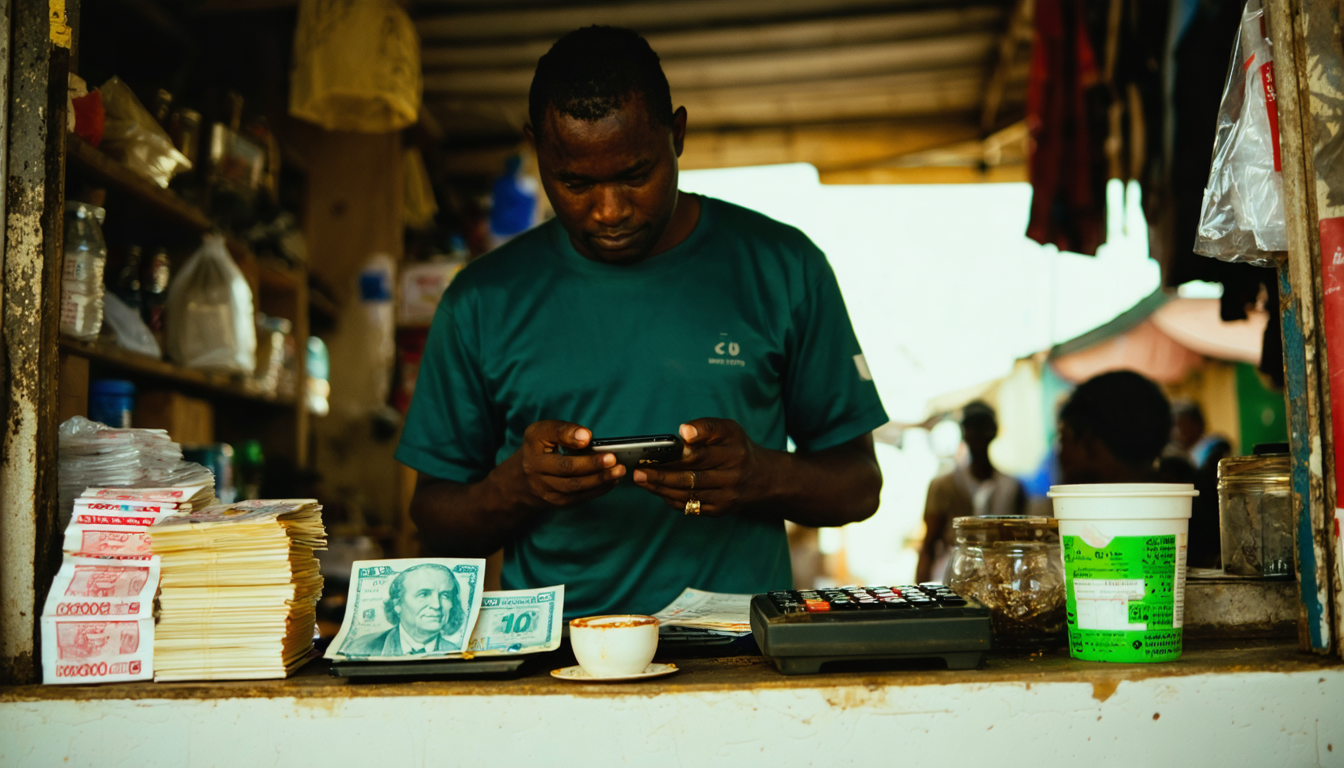
Nigeria is sending contradictory signals. The Central Bank of Nigeria reported last week that the Purchasing Managers' Index (PMI) hit 53.0 in September—the fourth consecutive month of expansion, signalling that business activity is growing. Yet the same CBN data shows household confidence is weakening. For freelancers, remote workers, and small-business owners earning or holding dollars, this gap matters. It suggests opportunity for some, but also growing pressure on the ground.
What the PMI Boom Actually Means
A PMI above 50 indicates expansion. Nigeria's 53.0 score means factories, traders, and service businesses are reporting higher output, new orders, and employment. This is real. It reflects the economy's recovery from the 2023–2024 naira crisis, and it's been consistent for four months running. For dollar earners, this is broadly positive: more business activity typically means more demand for dollars (for imports, international payments, and cross-border deals), which can support the naira.
But here's the catch: this expansion is happening at the top end—among businesses with scale, access to credit, and international links. It's not trickling down evenly.
Why Household Confidence Is Cracking
The CBN's own data shows household confidence weakening. This is the real story. Households are the backbone of Nigeria's informal economy—market traders, transport operators, small retailers, artisans. If they are losing confidence, it usually means one or more of three things: prices are rising faster than income, access to credit is tightening, or job security is fragile.
All three are happening now. Inflation remains elevated (though moderating). The CBN cut rates in September, but banks have not fully passed those cuts to borrowers—and many small traders cannot access formal credit at all. Wage growth has not kept pace with cost increases. For a Lagos market seller or a Nairobi matatu operator, life is getting harder, not easier.
The Dollar Freelancer's Advantage (and Risk)
If you earn dollars—whether as a remote worker, freelancer, or exporter—the gap between business expansion and household weakness creates a specific advantage. Your dollar income is insulated from naira inflation. While a Nigerian earning naira salary watches their purchasing power erode, a dollar earner's salary stays stable in real terms. This is why dollar accounts remain so attractive.
But there's a risk hiding in that advantage. As household confidence weakens, pressure on the naira can spike. When ordinary Nigerians feel poorer, they often rush to buy dollars—not to invest, but to protect what little they have. This can create sudden demand spikes that push the naira weaker, even if the "official" economy looks fine. The CBN has been managing this carefully (the naira has gained slightly against the dollar in recent days), but the underlying pressure is there.
What This Means for Your Dollar Strategy
The PMI expansion is real, but it's narrow. It's benefiting businesses that can export, import, or operate at scale. If you are a dollar earner, you are in that category. The gap between business and household confidence suggests the CBN will likely keep rates steady or cut further to support household purchasing power—which is generally good for naira stability, and therefore good for dollar holders.
However, watch for signs that household pressure is forcing the CBN's hand. If naira weakness accelerates or the gap widens further, the CBN may need to tighten policy again, which could affect your ability to move dollars in and out of Nigeria smoothly.
For now: hold your dollars. The expansion is real, but it's not yet broad-based enough to pull households along. That means the economic story is still fragile, and dollar stability remains your best hedge.
The Wider Picture
Nigeria's economy is recovering, but unevenly. The PMI shows businesses are optimistic. Household confidence shows ordinary people are not. This gap is normal in a recovery phase—but it also signals that growth is not yet sustainable or inclusive. For dollar earners, it means your income advantage is real, but also temporary. Stay alert to CBN policy moves and watch how the naira behaves at the parallel market. When households feel pressure, that's when currency moves happen fastest.