

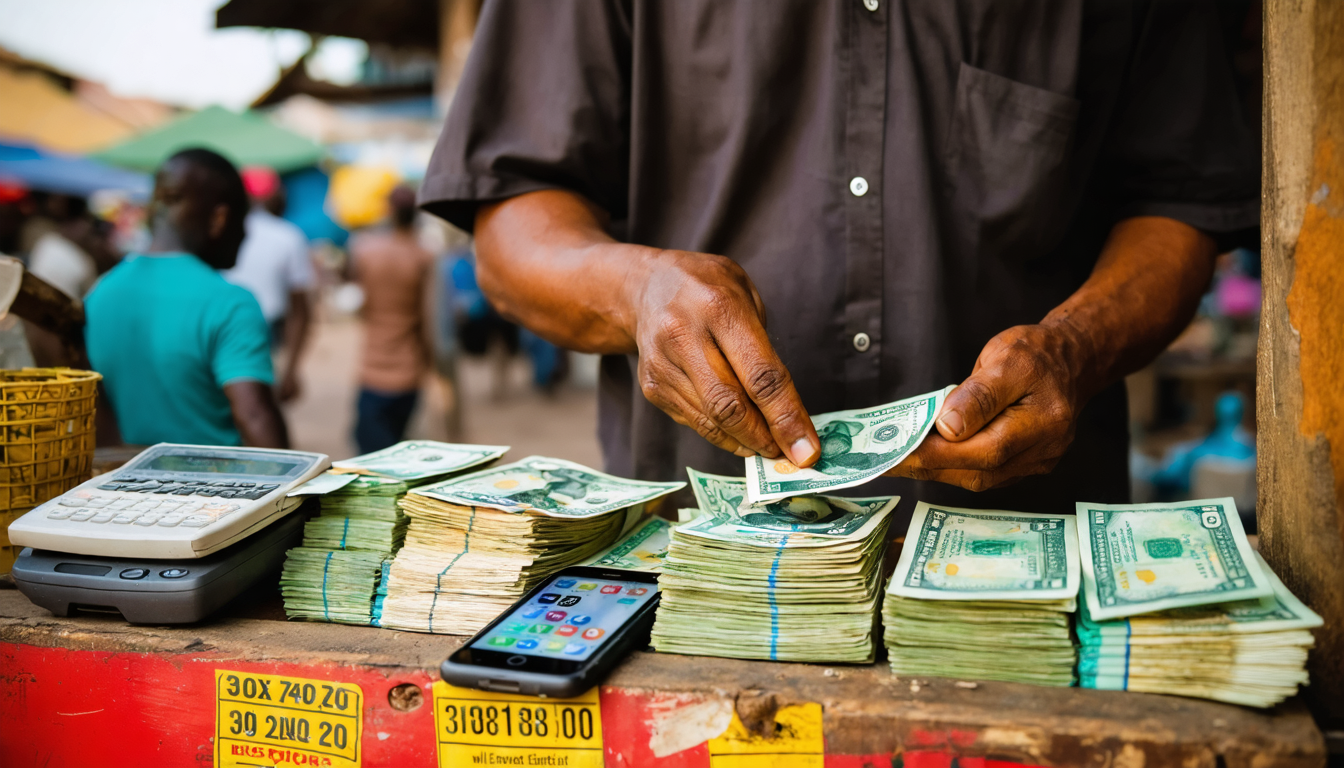
Nigeria has a cash crisis that most people don't see coming. Right now, an estimated N5.19 trillion sits outside the banking system—in wallets, under mattresses, in shop tills, everywhere but a bank account. That's roughly 8–10% of the total money supply. And it's directly warping the official FX rate that you rely on to price your freelance work, receive remittances, or run a dollar business.
The headline sounds dry. But the mechanics are urgent: when that much cash lives outside banks, it creates a shadow market for dollars. People who need dollars but don't trust (or can't access) the official channels turn to the parallel market, where rates are typically 5–15% worse than the official CBN rate. That parallel demand pushes the naira down faster than it should. Meanwhile, the official rate—the one you see quoted—gets distorted upward because it's based on formal banking flows, not the real economy.
For you as a dollar earner, this means two things: the official rate you're quoted might be artificially low (good short-term), but the parallel market where many businesses actually operate is much worse (bad long-term). And the instability keeps growing.
Why Cash Outside Banks Matters to the Dollar Market
The CBN and commercial banks have spent years pushing digital payments. But the cash culture persists—especially in informal commerce, agriculture, and street trade. When people hold cash instead of depositing it, banks lose visibility into money flows. They can't accurately forecast FX demand. They can't price forwards correctly. And businesses needing dollars have to hunt harder, often turning to the parallel market.
The CBN's recent move to allot N2.1 trillion in OMO (Open Market Operations) bills to banks and foreign investors is partly an attempt to mop up this excess cash and tighten liquidity. But it's a band-aid. The real problem is behavioural: Nigerians don't trust banks enough yet to keep their money there.
How This Pushes You Toward Worse Rates
When formal dollar supply tightens (because cash is hidden), banks and fintech platforms compete harder for the dollars they can access. That competition is good in theory, but in practice it often means:
- Wider spreads on card rates: If a bank can't source enough dollars from CBN auctions or customer deposits, it will widen its buy-sell spread to protect itself.
- Parallel market premiums: Informal traders and black-market dealers offer dollars at a markup—sometimes 10–15% worse than official rates—because they're taking on regulatory and counterparty risk.
- Slower settlement: When liquidity is tight, your dollar transfer or card top-up might take longer to clear, and you might get a worse rate if it's quoted at a later time.
What the CBN Is Doing—and Why It's Not Enough Yet
The Central Bank knows the problem. In June 2026, the CBN signalled a data localisation push (moving fintech data onto Nigerian servers by 2027) partly to improve its visibility into payment flows. It's also been tightening bank oversight and pushing digital wallet adoption through its financial inclusion targets. But these are long-term plays.
The immediate pressure is on interest rates. Higher rates in OMO bills (currently attractive to foreign investors) are meant to pull cash back into the formal system. But this only works if ordinary Nigerians believe the banks are safe and the rates are worth it. Right now, many don't.
What You Can Do
Lock in rates early: If you're expecting a large dollar inflow (a project payout, a remittance), don't wait for the rate to improve. The volatility from the cash-outside-banks problem means rates can swing sharply.
Use a dollar wallet, not a naira conversion: Platforms like LCash let you hold dollars directly, so you're not exposed to naira weakness when you receive payment. You convert to naira only when you need to spend locally—and at a time you choose.
Watch the parallel market as a signal: If the gap between official and parallel rates widens suddenly, it's a sign liquidity is tightening. That's when you want to have already secured your dollars.
Push for direct dollar payments: If you're a freelancer or contractor, ask clients to pay you in USD to a dollar account, not in naira. You sidestep the entire FX conversion problem.
The Takeaway
The N5.19 trillion in cash outside banks isn't just a banking statistic—it's a hidden tax on everyone who needs dollars. It distorts the official rate, inflates parallel-market premiums, and creates volatility that hurts dollar earners most. The CBN is moving to fix it, but change is slow. In the meantime, the smartest move is to hold dollars when you earn them, and convert to naira only when you spend. That way, you're not gambling on the FX market—you're just managing your own currency risk like any international business would.